The Jeddah Corniche Circuit boasts that it is the fastest street circuit on the F1 calendar, with average speeds already over 155mph in FP2. The track features a number of sweeping turns and blind corners due to the walls that line it, and Hamilton says it's a fun challenge for the drivers until they come across another car going slowly. Jeddah Corniche Circuit, which is located on the banks of the Red Sea, is the fastest street racing circuit in the world. With average speeds of over 250km/h, the 6.175km circuit is the second longest venue on the F1 calendar – with only Spa Francorchamps having a longer lap length.

The circuit's anti-clockwise layout features no fewer than 27 corners and is a real challenge for the drivers – especially with the race being held at night, under floodlights. It features a long section that follows the coastline and measures a total 3.83 miles, making it the second longest track on the calendar after Belgium's Spa-Francorchamps. Where it differs from other street circuits is in its flowing corners without the usual 90 degree turns passing close to the walls. There are also sections that look like being very high speed, with some simulations suggesting an average speed of about 160 mph and speeds of more than 200 mph in some sections.

Three DRS zones are planned, while other sections also offer overtaking possibilities. The layout of this new street circuit was yet to be confirmed when Karun ran through the season's tracks. At the time of writing, the FIA has confirmed the inaugural Saudi Arabian Grand Prix will be F1's fastest street circuit, with 27 corners and an average speed of 250kph according to race simulations.

The Saudi Arabian Grand Prix will be the season's second night race, played out over 6km on the second longest track on the calendar after Spa. It will be incredibly fast too, taking a physical toll on the drivers with average speeds of 250km/hr and a top speed of 322km/hr on the back straight, where cars zip alongside a lagoon past a gleaming new hotel. The circuit itself is reminiscent of another night-time track, Singapore, with low walls and high metal fencing either side of a narrow road lit up by twinkling lights, but it carries the speed of circuits more famous for their relentless adrenaline ride. The layout of this new street circuit was yet to be confirmed when Karun ran us through the season's tracks. At the time of writing, the FIA has confirmed the inaugural Saudi Arabian Grand Prix will be F1's fastest street circuit, with 27 corners and an average speed of 155mph according to race simulations. Judging from what I saw on the simulator, Saudi will be extremely quick, with a large number of very high-speed corners, some of them blind.
I think it's going to be very complicated from a driving point of view and there will be the extra challenge of the track surface being completely new. No cars have ever raced on it, there will be no rubber down and probably some oil will still be coming out of the tarmac, which is what normally happens at a new circuit. So, we are looking at a street circuit with quite low grip, which is a new challenge as no one has any data from the track. But for our part, we showed in Qatar that we can adapt fairly quickly to a new situation, running near the front immediately from the Friday. However, we will have to work hard to be quick over a single lap and also a long distance, to find the right compromise for both Saturday and Sunday. Another thing that is clear from the simulator is that the speeds are very high, but the walls are very close, so it should be impressive from the cockpit and a nice challenge, which we must prepare as well as possible for.

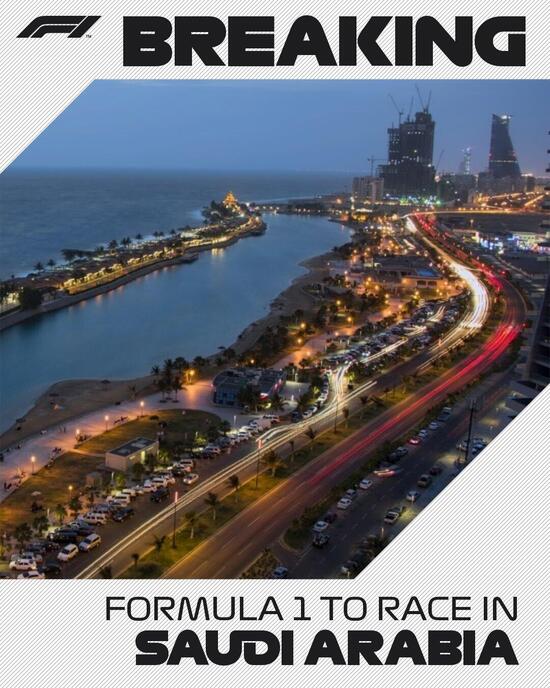
Average speeds around the Jeddah Corniche Circuit are set to be 252km/h – quicker than those at Silverstone, and second on the 2021 calendar only to Monza – aka 'The Temple of Speed'. It will, quite simply, be the fastest street circuit ever seen in Formula 1 – while the track will also feature the most corners on the 2021 calendar with 27, many of them quick, sinuous bends as the drivers wend their way along the Jeddah waterfront. That means wall-to-wall racing through most of the spring, summer and autumn which is great for TV viewers, but makes for a punishing schedule for the hard-working teams. Named as the 'fastest street track' on the Formula One calendar, with Formula One cars simulated to have an average speeds in excess of 250 km/h , the track is the second longest on the Formula One calendar. It was designed by Carsten Tilke, son of the famed circuit designer, Hermann Tilke. Formula One unveiled its longest and fastest street circuit on Thursday, predicting top speeds of 322kph and wheel-to-wheel racing when Saudi Arabia hosts a race for the first time in Jeddah in December.

Plus, it will be the second-longest track on the calendar with an expected average speed of over 250km/h. In just 100 days Formula 1 will roar into Jeddah as Saudi Arabia will host its first-ever Grand Prix. In the countdown to the inaugural race weekend, circuit designer Carsten Tilke has revealed the spectacular course will be the fastest street track in Formula 1 history. Set to be the sport's fastest street track with average speeds of 250kph , the circuit will feature 27 corners and run to 3.8 miles in length. Named as the 'fastest street track' on the Formula One calendar with Formula One cars simulated to have average speeds in excess of 250 km/h , the track is the second-longest track on the Formula One calendar, with only Spa-Francorchamps being longer.

Controversy then began on Lap 37, as Hamilton had made use of DRS to pass Verstappen on the main straight, but Verstappen took back the lead cutting Turns 1 and 2, prompting the team to order Verstappen to give back the position. As he did so coming into the final turn, Verstappen abruptly slowed, causing Hamilton to collide into him and damaging his front wing. Despite the damage, Hamilton continued setting fastest laps and closed back into Verstappen again, who ceded the lead to him on the last turn again but reclaiming the lead as Hamilton ran wide. Verstappen was then issued a 5-second time penalty for the corner cutting, before Hamilton finally took back the lead for good on the last corner on Lap 43 as the Dutchman's medium rubber started to lose performance. Bottas meanwhile had cleared Ricciardo for 4th during the chaos, as Vettel retired with a damaged car with five laps remaining.

The Jeddah Corniche Circuit runs alongside the Red Sea using normal roads and is described as a street track, but it has nothing in common with places like Monaco or Singapore. At 6.174 kilometres it is the second longest circuit of the year and instead of 90 degree corners, typical of a street venue, it has 27 mainly high speed flowing turns with a predicted very high average speed. The fastest street track in Formula 1 history – that's what the drivers will be taking to when they line up for the inaugural Saudi Arabian Grand Prix in Jeddah on December 5, with race organisers revealing an ultra-fast circuit layout. It is expected to be the fastest street circuit with an average lap time of 252km/h predicted.

The 2021 Formula 1 season is well underway, with the Monaco GP this weekend. The championship features a record 23-race calendar this year and that means wall-to-wall racing right till mid-December. Curious to know what are the best overtaking spots at each circuit, or what will be the optimal setup strategy? Our sister publication Autocar UK caught up with former F1 driver Karun Chandhok, who explains just that.
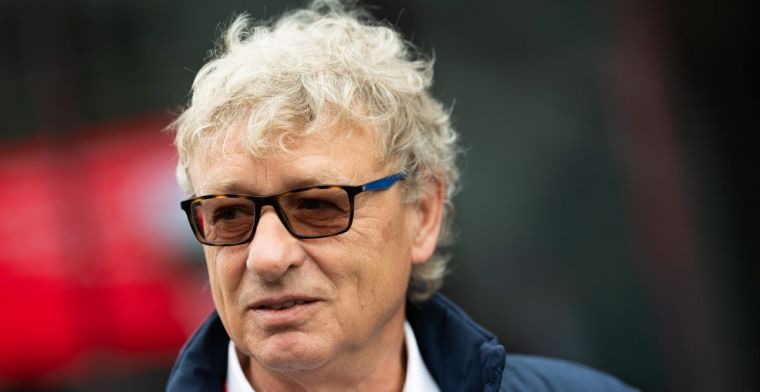
Designed by popular F1 circuit architect Herman Tilke, the Saudi Arabian Grand Prix circuit is anticipated to become one of the fastest street circuits in F1 history. Nearing completion, the 6.1 km circuit will feature 27 fast corners, and will be the second longest circuit on the calendar, with Spa-Francorchamps in Belgium being the longest. In August 2019, plans for a permanent motorsports complex to be built in the city of Qiddiya were made public. The project was conceived by Test and Training International, a motorsports consultancy headed by former Formula One driver Alexander Wurz, with the objective of creating a world-class circuit capable of hosting all FIA categories through to Formula One. In January 2020, plans for a race track in Qiddiya were officially confirmed at an event, where track designer Wurz, appeared alongside current and former Formula One drivers who were given the opportunity to drive on the layout in a racing simulator. During the event, it was confirmed that the track was designed to FIA and FIM Grade 1 standards.
The new layout shaves 273m from the circuit's length (it's now 5.281km), adds an extra lap to the race distance and should improve the overtaking opportunities for drivers, which have typically been hard to come by. It looked to make a statement by delivering a grandiose event, an approach that extended to the track layout and design. Marketed as F1's fastest and longest street track at a shade under four miles, the Jeddah Corniche Circuit drew comparisons to Baku before a car even hit the track. It boasted 27 corners, a number of high-speed sections and only three big braking points. In January 2020, plans for a race track in Qiddiya were officially confirmed at an event, where track designer Wurz appeared alongside current and former Formula One drivers who were given the opportunity to drive on the layout in a racing simulator. The sport will visit Saudi Arabia for the first time in what is being touted as the fastest street circuit in F1.

Everyone had previously assumed that the fast and flowing nature of the track would favor Mercedes. But F1 track designer Hermann Tilke believes the track could favor Red Bull as well. While a new circuit will be built near the capital Riyadh in 2023, drivers will race on the Jeddah City Circuit along the Red Sea in the coming years. On the street circuit, drivers can reportedly reach average lap speeds of around 250 kilometres per hour. Billed as the 'fastest street track' on the F1 calendar, the high-speed Saudi layout has already been tipped to favour Mercedes' car.

The Jeddah Corniche Circuit is designed by Hermann Tilke and is the fastest street circuit which Formula 1 has ever visited. Construction work on the site is due to be completed just before the race weekend. No one has driven this track before, so neither the teams nor the drivers will know what the cars need to go fast there. The circuit layout should favor the cars with high straight-line speed, which would hand the advantage to Mercedes. There are a few fast corners that, with the right set-up, could give the Red Bull an advantage.

But as with any new track there is plenty still to be figured out, like just how the tyres will react. "The high speeds with fast corners will obviously play a big part in the way that the tyres behave," said Pirelli's Mario Isola. The entry is very fast, and it will be difficult as the profile requires the car to begin braking and turning at the same time.
Having a camber on the corner will allow drivers to keep the speed up all the way through what is a very, very long fourth-gear corner as the track loops back upon itself. The speeds, the proximity of the walls and the fact there isn't much run-off make the whole track daunting – but it's especially apparent at the exit of Turn 13 where you need to run close to the wall. There's a short straight to Turn Four, which is a quick left-hander, followed by a sequence of very fast, and then super-fast bends all the way to braking for Turn 10.

Through here it's very important to concentrate on the positioning of the car because it's very easy to be off-line. This section will be a little more difficult at high-fuel than it will in qualifying spec. Turns Five, Six and Seven will be flat – or very close to it – in qualifying.

Also, Drag Reduction System zones will be incorporated into the straights to further aid with overtaking, much to the delight of F1 racers. Specifically designed to churn out exciting and thrilling races, the Jeddah Corniche Circuit provides ample opportunities for racers to overtake one another through its numerous action-packed corners, twists and turns. Simulations have suggested that the circuit will allow F1 racers to yield an average lap speed of 252kph with top speeds expected to reach 322kph approaching the final corner. The country has set itself the goal of building a circuit that is distinctive from the rest of the Formula One calendar. Saudi Arabia still has some time to build the track, as it is only the penultimate race weekend before the end of the season. Largely using existing roads, and encircling a lagoon, the floodlit circuit will feature 27 corners with cars lapping at average speeds of 252.8kph, according to Formula One's simulations.
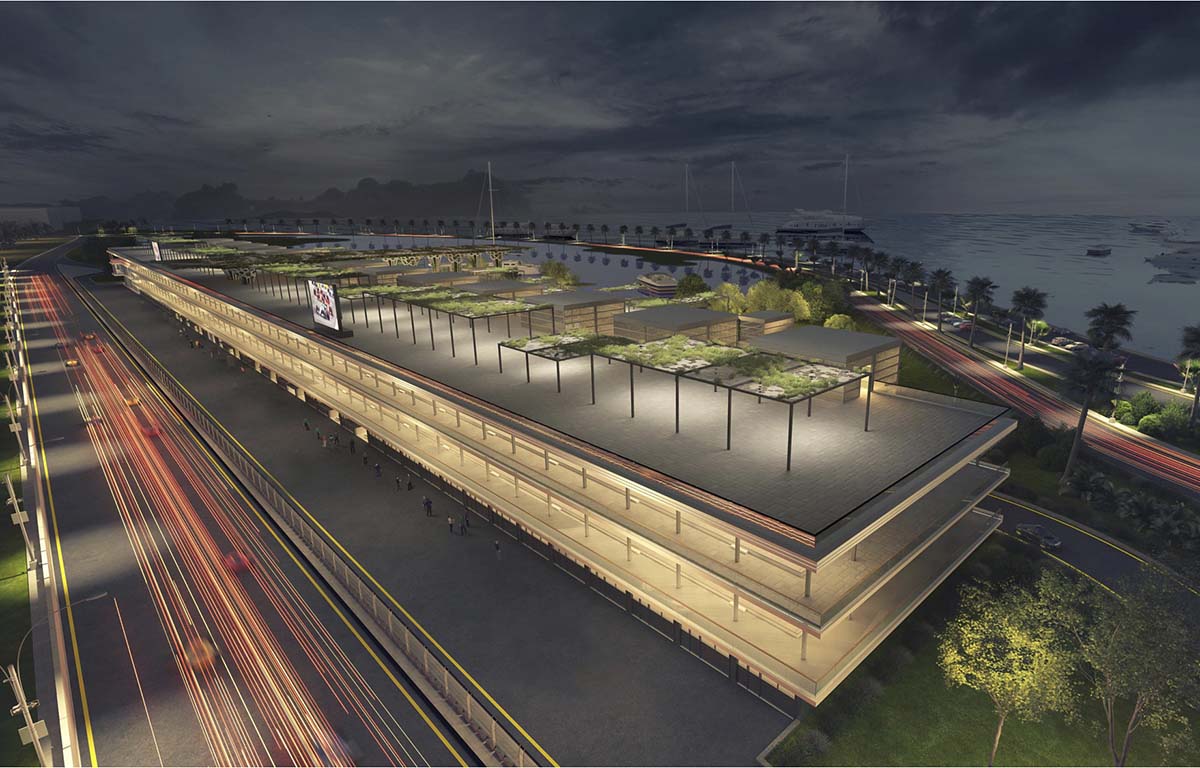
Largely using existing roads and encircling a lagoon, the floodlit circuit will feature 27 corners with cars lapping at average speeds of 252.8kph, according to Formula One's simulations. Mistakes on this circuit which features a few blind corners and doesn't offer large runoffs can prove to be expensive. The freshly laid track may not offer the desired grip in the beginning but hopefully as the race weekend progresses the grip levels will increase. Keeping the brakes in the working temperature range is going to take some effort as the circuit doesn't feature enough braking zones between flat-outs. Tyre management and performance will play a big role in the outcome on this circuit; the 27 corners will work the tyres hard.
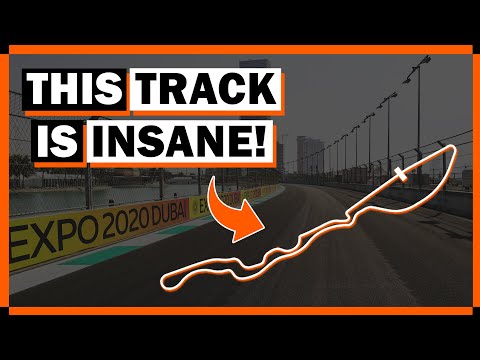
The posts under this series will be penned by Saumil Patel, an avid fan of the sport. You can follow the full series throughout the season by using the 'Know Your F1 Circuit'tag. This post focuses on the F1 facts, history & stats of the 'Jeddah Corniche Circuit' – a circuit that's expected to claim the 'fastest street circuit in the world'.

The Jeddah Corniche Circuit is brand new and billed as the fastest street circuit in the world. Sitting right on the coast of the Red Sea, it's a picturesque location in a controversial country and part of Formula 1's larger plan to add more street circuits in glamorous locations. Mercedes extended their lead to 28 points in the constructors' standings from Red Bull, following Perez' retirement and Verstappen unable to strategically deny Hamilton the fastest lap point due to the time penalties imposed.

Both McLaren drivers outscored Ferrari by one point after the race, meaning Ferrari were all but guaranteed to secure third in the constructors' championship, heading into Abu Dhabi. Despite losing out the podium position, Ocon closed into within 5 points of his team-mate. Hamilton ultimately claimed the win at the inaugural race on the corniche course, with Verstappen finishing nearly seven seconds behind having lost pace on worn rubber, but with five seconds added to his race time due to the penalty from corner-cutting. Completing the points would be Ricciardo, Gasly, Leclerc, Sainz, Giovinazzi and Norris, who was among those pitted during the safety car and dropped to the back during the red flag periods. The 6.1 km (3.8 mile) Jeddah Corniche Circuit in Saudi Arabia will be a quasi-street circuit, featuring a season-most 27 corners, and is expected to be among the fastest on the calendar. It was designed and constructed by Tilke Engineering , with sizeable input from Formula 1's technical team.
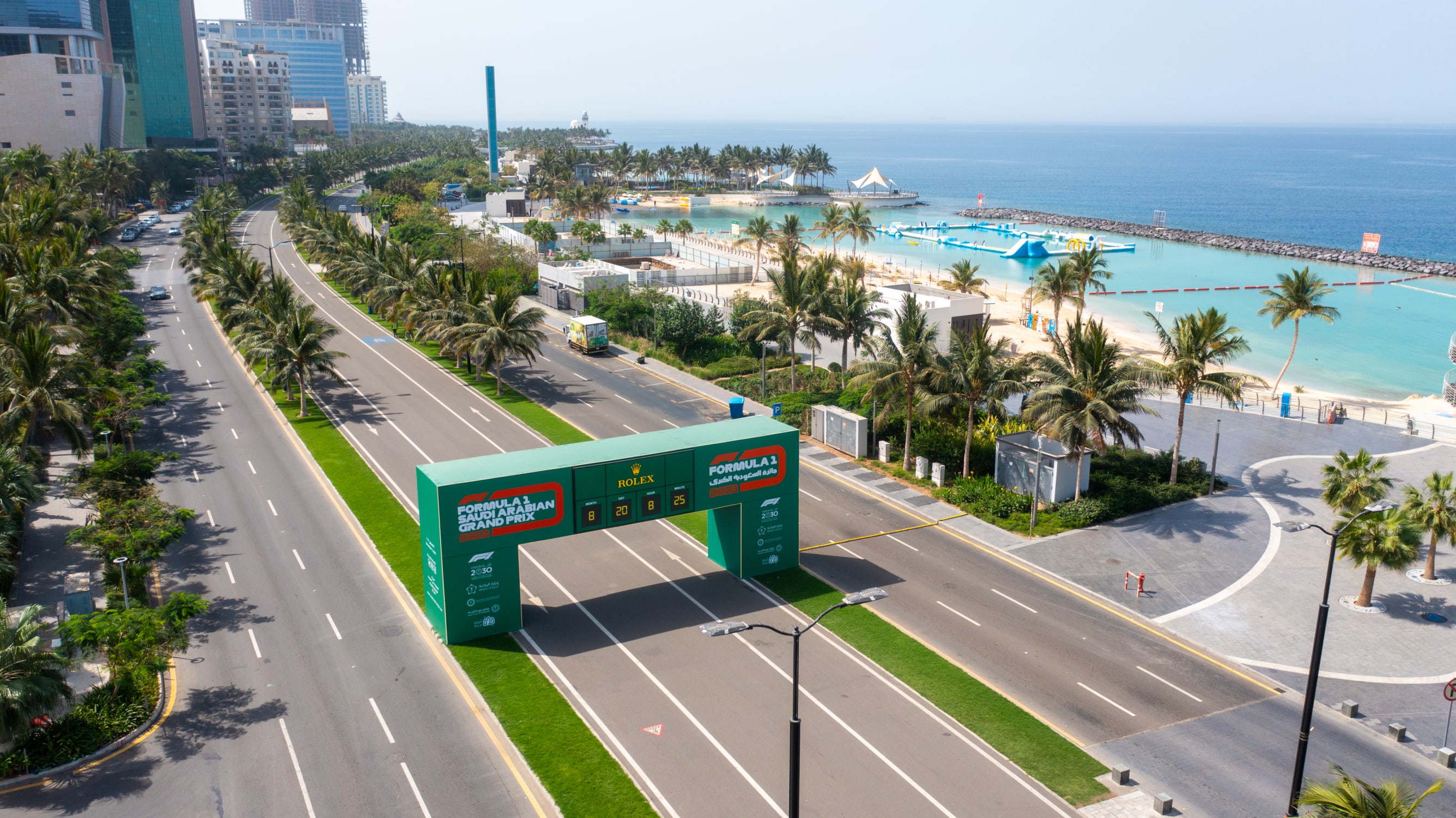
The narrow course is a speed haven and is the fastest street track on the calendar, with the circuit winding around a lagoon next to the Red Sea. It's always good to do something different, driving something that's not a Formula 1 car. You can learn from it and get interesting feedback that can be useful to help you improve in some areas.
Formula 1 Saudi Arabia Track It's also physically demanding, using different muscles to those you need in an F1 car, making it also useful from the training point of view. Apart from that, I spent some time in the simulator learning the new Saudi track. It's really fast and that means confidence in the car will be an important factor, because the run-off areas are not so big.

It will be important for me to do a good job of building up speed during the free practice sessions. At least I am in the same situation as the other drivers, as this circuit will be completely new to everyone, just like Qatar. Jeddah is a super-super-fast street circuit – but the first combination of corners is the slowest on the track with a clever left-right chicane before opening out into the faster part of the first sector. The entry into Turn One is quite wide and, with help from DRS, it's probably the best overtaking spot on the track. This is the 'stadium section' of the circuit, with the track exiting out under a grandstand through Turn Three.
The first-ever Saudi Arabian Grand Prix is now less than three weeks away, with the drivers set to race around what will be the longest – and fastest – street circuit in Formula 1 history on the first weekend in December. The circuit is located in the marvelous city of Jeddah, 12km north of the city center. The track encircles a lagoon and it has three DRS zones with the hope of creating a great, entertaining race for the fans. Moreover, the start will be in the evening, which means that the cars and the lights will produce a stunning spectacle.
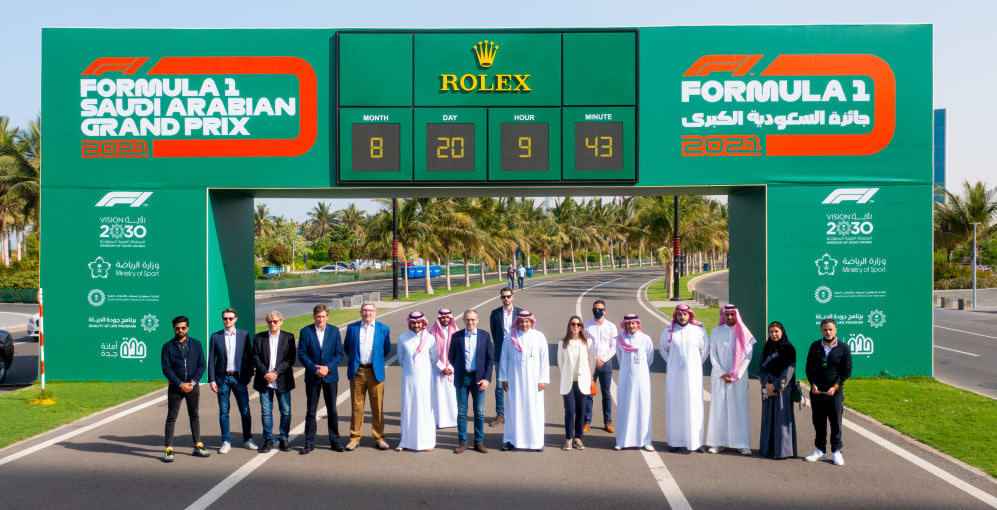
As a result, long straights and high-speed corners will ensure the Jeddah Corniche Circuit will have the highest average speed of any street track in Formula 1® history, estimated to be 252km/h. "We don't want those old classic street circuits where you turn 90 . We want fast, sweeping circuits, we want circuits that are going to challenge the drivers and they are going to love it. We want circuits where we can have wheel-to-wheel racing." Exiting the first potential DRS zone, entering into corner 1, a 90° medium speed left hander exiting into corners 2 & 3, both high speed right handers may well be the first key overtaking sector. Corners 4 through 12 are a fast-sweeping combination corners taken flat-out.
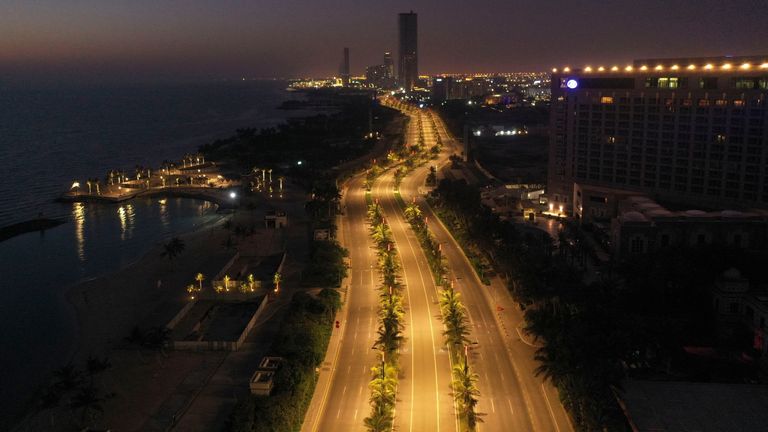
Corner 13 is a fast sweeping banked 180° left hander with overtaking opportunities leading into more flat-out kinks . Long, flat-out straights, fast sweeping, banked corners with a few tight twisty ones. The initial design layout had limited overtaking opportunities but Formula 1 seems to have given their inputs and hopes that spectators don't have to see a car parade on the circuit! Of the twenty-seven corners quite a few of them are kinks on full throttle sections.
The teams, drivers, and entire series head west from Qatar, across the Arabian peninsula to Jeddah, in Saudi Arabia, for the next round in the championship. In the last weeks leading to the race weekend, photos circulated online showed that the circuit construction progress appeared to have been behind schedule. Race officials however assured that the track would be finished in time for the weekend, with the track finally receiving approval from the FIA one day before the first practice session on Friday. The Grand Prix has received criticism from Amnesty International on the grounds of human rights in Saudi Arabia. The Saudi Arabian Grand Prix first appeared on the first draft of the 2021 Formula One provisional calendar, which was shown to teams at a Formula One Commission meeting, held in October 2020. The draft calendar saw all 22 races from the original 2020 calendar carried over, with the addition of Saudi Arabia.

In November 2020, it was announced that the city of Jeddah would host the inaugural Saudi Arabian Grand Prix, in collaboration with the Saudi Automobile and Motorcycle Federation. After arriving on Wednesday, or sometimes earlier depending on sponsor commitments, drivers typically walk or cycle the circuit with their engineers on a Thursday of the race weekend. But this takes on added importance at a new venue as they scout the landscape and look for anything of note. Circuit data and information is made available and scanning tools mean the track can effectively be replicated. That goes way beyond pure layout, including elements such as surface characteristics, whether any turn is cambered, curb configuration and if there are any bumps.


No comments:
Post a Comment
Note: Only a member of this blog may post a comment.